Can a person like mathematics and art at the same time? Mohammad Asfaque, senior pure mathematics and economics major, has always been an enthusiast of art and choosing a major completely different from his interest was a challenge. But his recent trip changed his idea towards the dilemma.
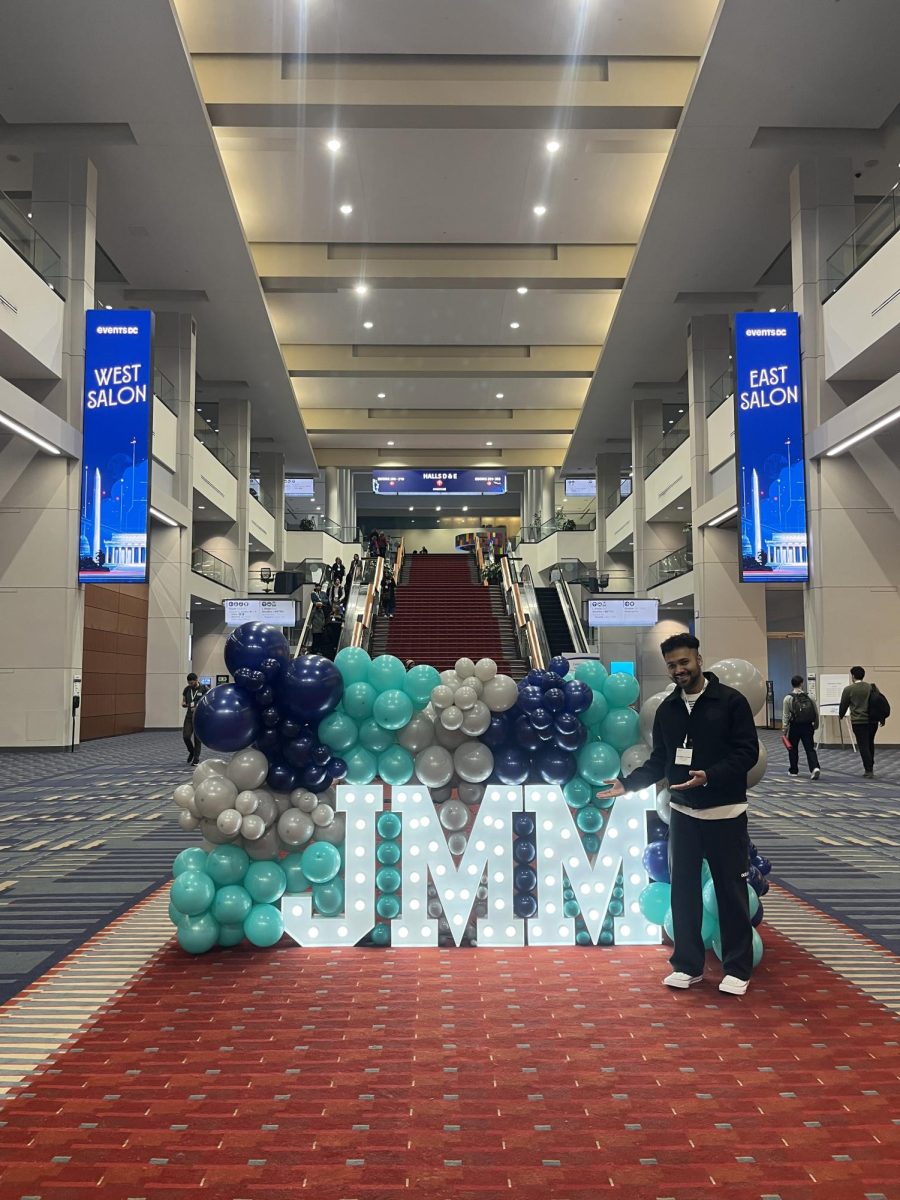
Asfaque went to the Joint Mathematics Meetings (JMM) from Jan. 4-7. JMM is a campaign acting as a joint force with mathematicians presenting their work.
“When you attend this kind of meeting, you will find out what’s going on in the world right now in the field of mathematics,” Asfaque said. “There were poster presentations from grad students, undergrad students, oral presentations and I think there were some exhibit halls too […] which was actually my favorite part of the conference.”
After his highschool, Asfaque worked on logarithmic function and found the pattern to predicting log values which later got to be his first paper to get published in Nepal. This was a turning point in his life to pursue mathematics.
This was Asfaque’s second time in Washington D.C. Compared to his first visit, this was strictly professional which gave him quite an impression.
“When I went there, it felt like I didn’t belong here because there were a lot of graduate students and they all looked really mathy… and I didn’t know who to talk to,” Asfaque said. “I didn’t see younger people there and even if there were younger people they were really smart and really mathematical. I went to different presentations on the very first day… it was really mathy even for me.”
One of the events in the convention was storytelling in which Asfaque got selected to share his story on what studying mathematics means to him.
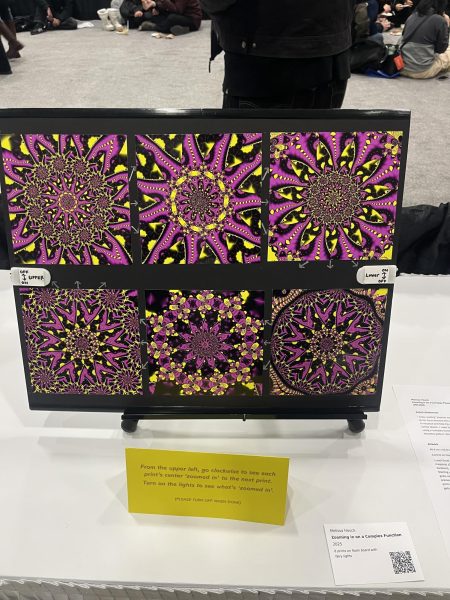
Asfaque was surprised when the convention had more to offer than mathematics. He showed his interest in the exhibition hall of the three day convention.
“In the exhibition hall, they had math art and there were some math poetry written by some famous mathematicians…they were writing basically about their struggles in choosing mathematics and trying to study math,” Asfaque said. “There was this book called, ‘Women in STEM’ or something and it had a lot of poems written by female mathematicians.”
Asfaque has also been to other mathematical conventions when he was a sophomore. Kappa Mu Epsilon (KME) is a specialized honor society whose chapters are in Washburn. He went to a regional conference funded by the WSGA and mathematics and statistics department.
The JMM convention slowly progressed into making Asfaque get in his elements. He said he gradually learnt that he also belonged there.
“Math is one subject where it gets really specific as you go up higher in math,” Asfaque said. “You don’t understand other fields but you understand your field… and getting to learn that others were also in the same boat as I am.”
As an enthusiast of art, Asfaque was taxed with the thought of choosing either math or art. But the convention gave him clarifications.
“Now that I saw math arts, math poetry, math songs, I realized that I don’t have to abandon art or math; I can actually bring them together,” Asfaque said.
Asfaque learnt how unlearnt he was which he said was a humbling experience.
Looking towards the future, being a current president of KME, Asfaque revealed his future plans.
“It is not out yet I think but we are hosting a national event for KME and there will be some undergrads presenting and all,” Asfaque said.
Edited by Anushma Dahal and Bidhya Sapkota