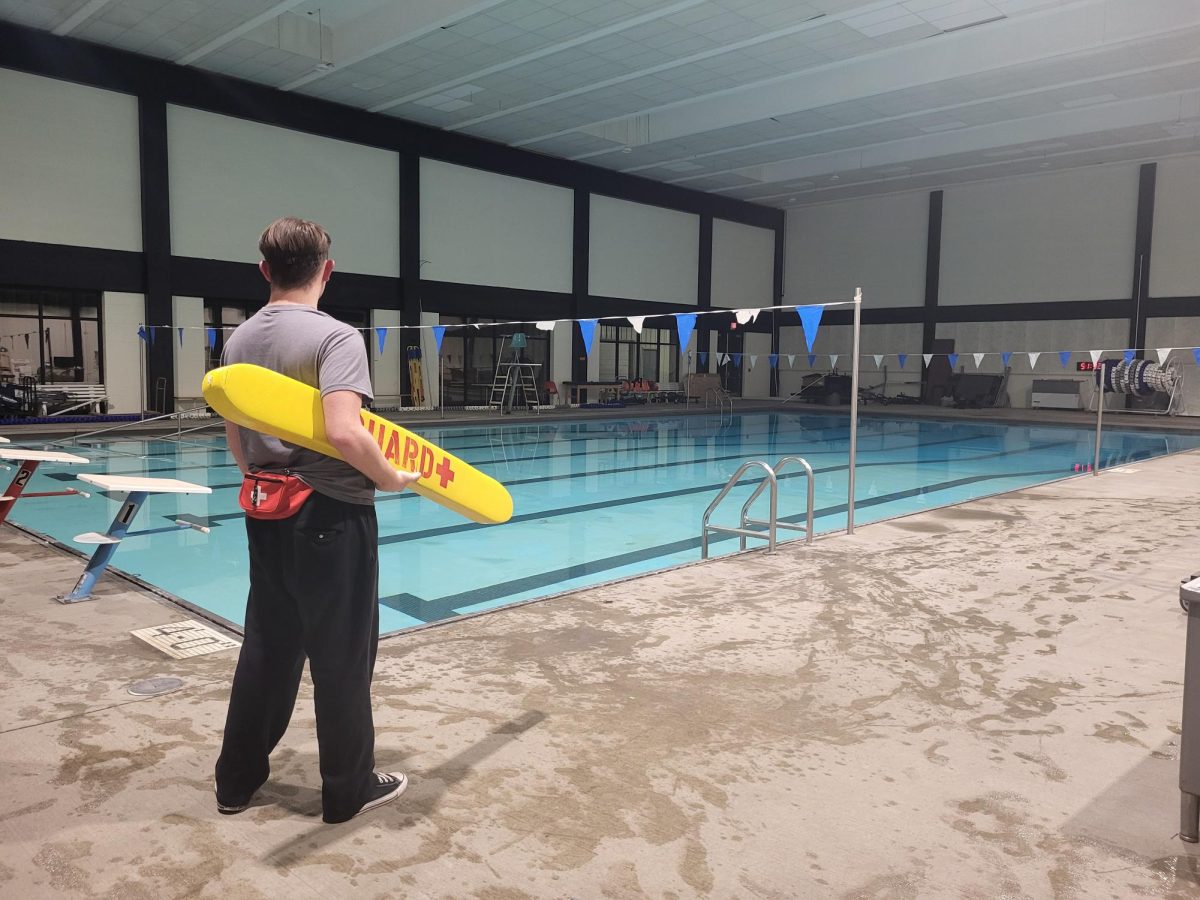
Washburn University has announced that the Garrett Natatorium, a long-standing campus facility, will be permanently closing at the end of the current academic year. The decision marks the end of a 40 year presence on campus, where the pool has served students and members of the Topeka community since 1984.
The six-lane, 25-meter pool is located on the southeast side of campus in the Petro Allied Health Center near the Lee Arena on the ground level. The decision was made due to rising maintenance costs and declining student usage as contributing reasons for the closure.
The decision followed months of careful review that examined pool usage, overall space needs, and cost of necessary repairs due to the facility’s age.
Zach Gable, assistant athletic director for facilities and event management, said there is a lot of behind-the-scenes work that is involved in maintaining the pool. Facility staff handle daily upkeep, including using automated equipment to clean the pool, maintaining pumps, and monitoring water temperature to ensure safe operation. When issues arise, repairs can be costly. Gable added that learning to manage a pool has been an adjustment, noting his background was more familiar with other facilities, and understanding pool operations compared to a basketball arena required a new level of experience.
“If those pumps have an issue, they can cost a pretty penny,” Gable said.
Gable described the pool as outdated and in need of major improvements. He emphasizes that much of the equipment shows signs of wear, with some parts broken or deteriorating. The floors are cracked, the walls need patching, and new pumps should be installed. “It is lackluster, it needs some good work to be put in there, and it definitely needs a little bit of a facelift,” Gable said.
He added much of the equipment is not up to standard and requires frequent maintenance and said he understands and supports the decision to close the pool. Funding should be prioritized toward facilities that see the most use. “If the money is going to something underused, then it is not worth it,” Gable said
Gable noted that students are primary users of the pool, whether for classes or open lap swim. He added that regularly scheduled classes, particularly on Tuesday and Thursday afternoons, have been held at the facility for many years.
People who use the pool shared their thoughts on the closure, including members of the Washburn Rural Highschool Swim team, who rely on the facility.
Kaylee Fernandez, junior swimmer at Washburn Rural High School said the team uses the pool from 3:30 to 5:30 p.m. for practice. She enjoys the pool because it is not often used by others, allowing her and her team to practice freely.
“It is my third year swimming in this pool now, so it’s kind of like another home, and we’re sad to see it go,” Fernandez said.
Because Washburn Rural does not have its own pool, the closure will leave the team without a pool they can practice comfortably in and force them to move to Hummer Sports Park Pool, which is already used by other local high school teams. Fernandez noted that the shared space can become overcrowded.
“It’s like we have two lanes for like 30 girls,” Fernandez said.
Joanna Dieh, junior swimmer at Washburn Rural High School, said she is saddened by the closure. She and her teammates use the facility daily after school and expect their routine will change, likely requiring earlier or later practice times.
“It’s easier to go from school to the pool. Being able to come here is nice, and it is a good area,” Diehl said.
She added that traveling to the TSA pool at Hummer Sports Park will be a significantly longer drive.
Although Fernandez and Diehl said they are upset by the closure, they also understand the decision due to the facility’s condition. They noted issues such as worn flooring, overcrowded equipment areas, and maintenance concerns in the locker rooms, including overflowing toilets and slippery starting blocks.
Alexis Hidalgo, freshman majoring in general studies, shared her perspective as someone who does not use the pool. Hidalgo views the pool’s importance as evenly balanced, noting that while it offers certain benefits, she does not consider it essential. She suggested that funds allocated to the pool could potentially be redirected toward other areas that may have a broader impact on student life.
Hidalgo acknowledged that the pool provides value for students looking to maintain their health through swimming but believes it is not a necessary resource for all students. When informed about potential scheduling conflicts involving the Washburn Rural swim team, she expressed concern about the overcrowding. She noted that swimming in a crowded environment may limit the ability to practice comfortably and independently.
“It’s better to have your own space and swim freely without bumping into others,” Hidalgo said.
Despite her initial stance, Hidalgo reconsidered after learning about the impact on other users. “Now I feel like they should keep the pool,” she added.
With the Garrett Natatorium set to close at the end of the academic year, students and community members are left to adjust to the change marking the end of a long-standing campus resource. However, resources are redirected toward areas that can better serve student needs.
Edited by Arohi Rai and Anushma Dahal