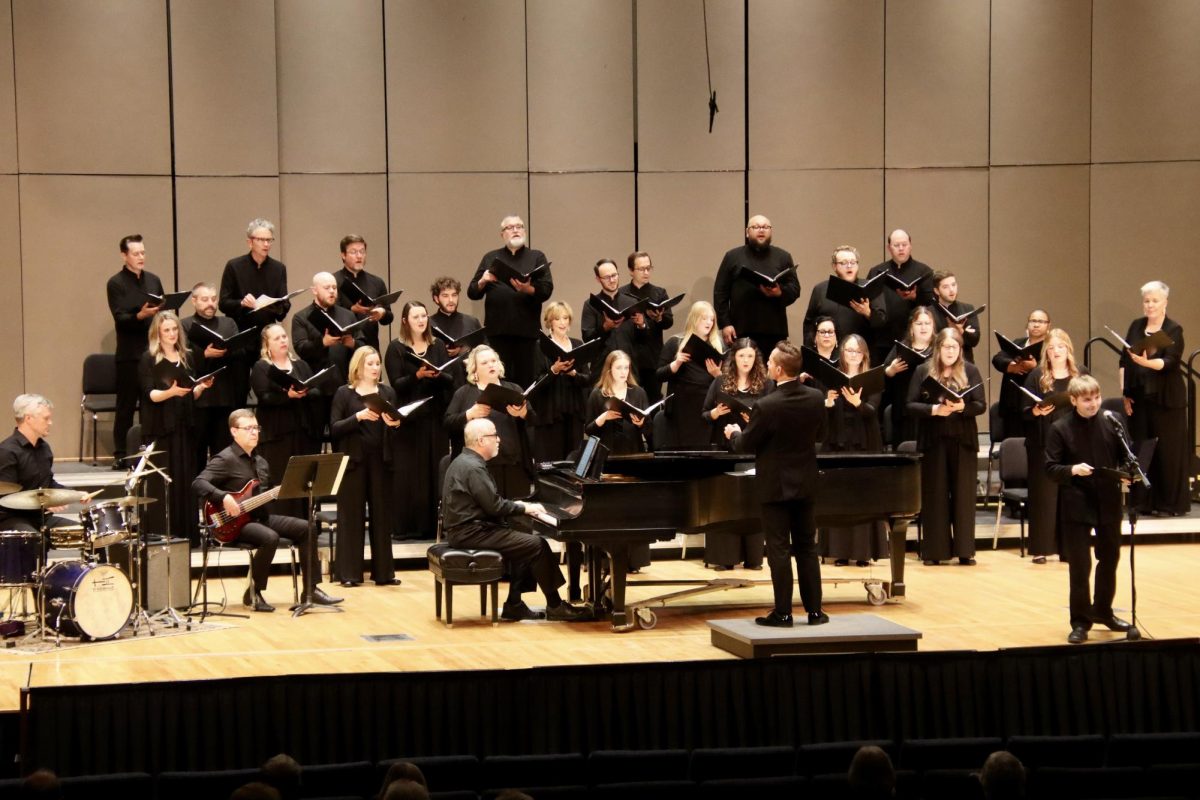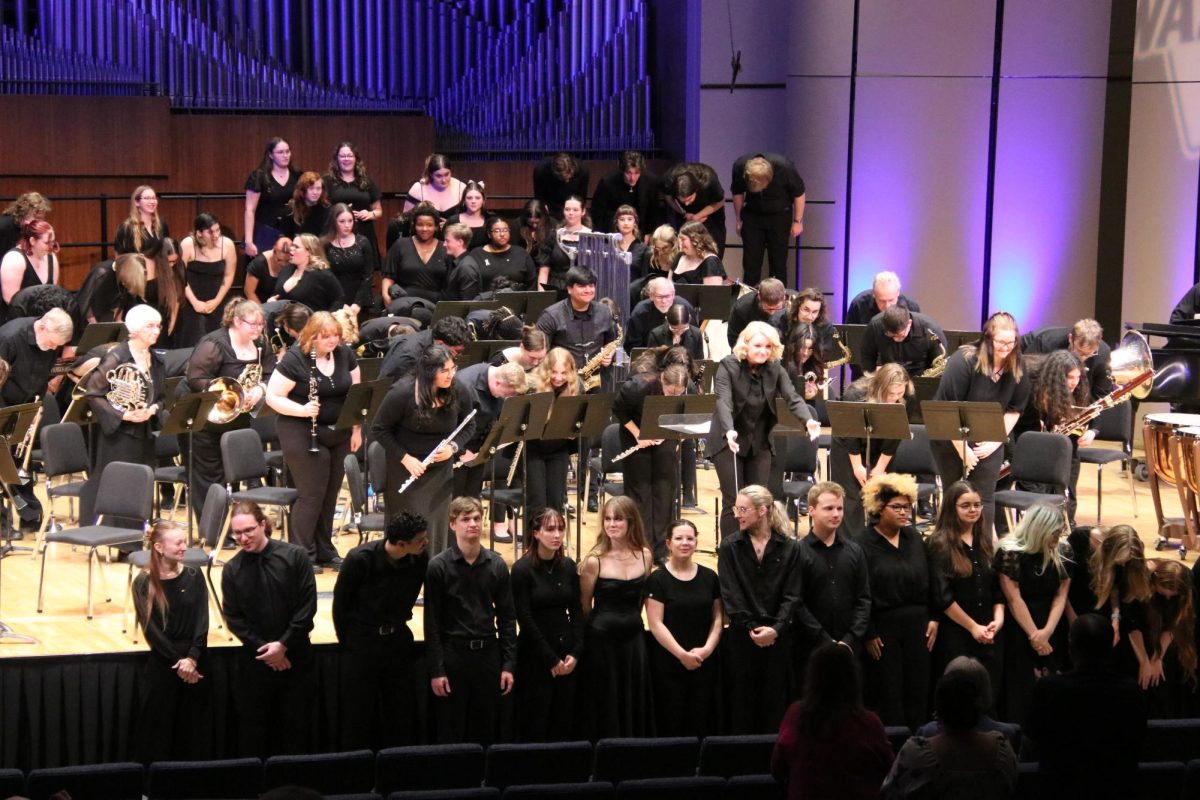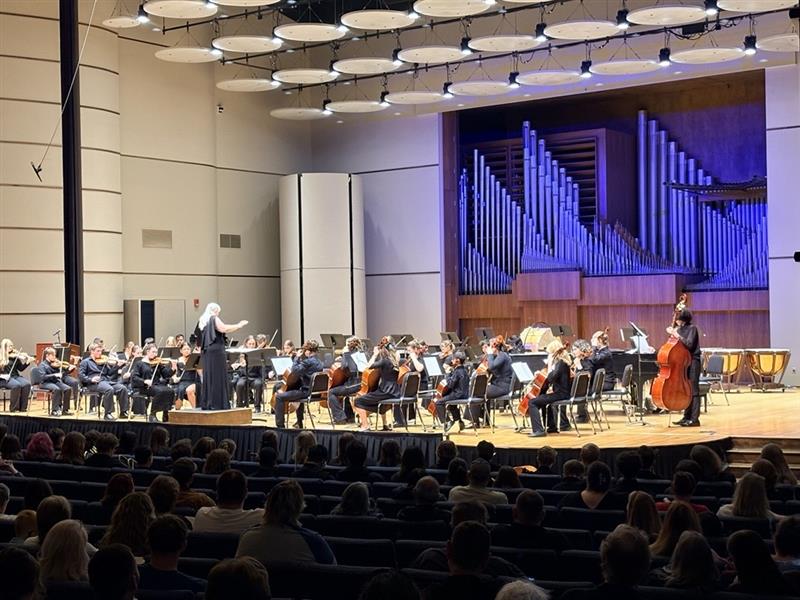
On Sunday, April 12, the Topeka Youth Symphony orchestra held its spring 2026 concert at White Concert hall. The concert started at 3 p.m. and around 1000 people were present to attend the concert.
This orchestra brought together young musicians from across the Topeka community. The concert featured multiple ensembles, including the Symphonette, the Chamber Orchestra, Wind Ensemble and Youth Symphony under different conductors.
The Symphonette, led by Carolyn Sandquist, opened with lighter selections like “Mozart Alleluia.” It was followed by the Chamber Orchestra, under Ryan Masotto, performing pieces such as Grieg’s “Prelude from the Holberg Suite.” The Wind Ensemble, directed by Rebecca Meador, introduced a different texture with “Hero’s Journey,” while the youth symphony, conducted by Nicolas Carr, performed more demanding works, including Beethoven’s “Coriolan Overture.”
As the concert progressed, each group added a new level of complexity, building toward a final combined performance of “A Can-Can Festival.” Through this structure, the audience experienced the full range of the program, from beginner to advanced musicians, while also highlighting the role of each conductor in shaping the sound and progression of the evening.
Between excitement to finally showing their work and nervousness of performing correctly, our community’s youth shared their experience with the orchestra. Lizzie Burch, violinist, shared the opportunity to perform with the orchestra as an honor, explaining that while music can be challenging it is really rewarding.
Beyond the stage, the orchestra’s impact on the community was clear.
“[The program] allows people to interact with music in ways that they wouldn’t usually have,” Peter Blum, marketing manager of Topeka Youth Orchestra said.
That accessibility is something Patricia Judd, faculty member of the Washburn University School of Law and parent of Sarah Judd [performer], deeply appreciated noting that students didn’t need to be “virtuoso” to participate. Instead, the orchestra offers different levels creating what Judd described as “a terrific opportunity for the youth of Topeka.”
The concert also marked an important milestone for the musicians. According to organizers, the performance represents “the culmination of all their work” after months of practicing both individually and as a group.
The Spring 2026 concert reflected the continued growth of the ensembles and the program’s role in supporting music education in the Topeka area. With multiple groups performing at different levels, the event highlighted both individual development and ensemble coordination. The Topeka Youth Symphony Orchestra is expected to continue its season with additional performances and activities, giving students further opportunities to perform and connect with local audiences.
Edited by Bidhya Sapkota and Arohi Rai