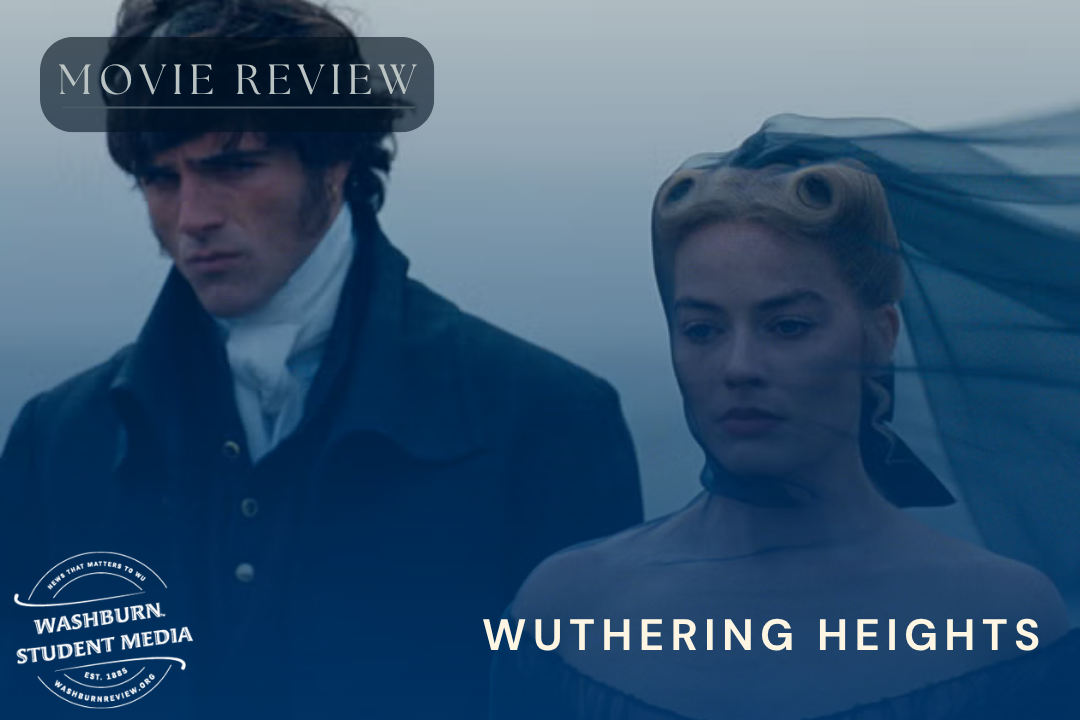
The novel Wuthering Heights by Emily Brontë has inspired many adaptations over the years. The latest is the 2026 film directed by Emerald Fennell, starring Margot Robbie as Catherine Earnshaw and Jacob Elordi as Heathcliff. While the film borrows the novel’s setting and characters, it misses much of the deeper essence that made the original story endure.
Set against the bleak and windswept Yorkshire Moors, the film follows Heathcliff, an orphan raised by the Earnshaw family and Catherine, whose bond with him grows into a destructive cycle of love, jealousy and revenge. Unlike the novel’s layered narrative, the movie follows a fairly straightforward storyline.
Visually, the film captures the atmosphere well. The gloomy landscape reflects the declining social class of the Earnshaw family, while Thrushcross Grange appears almost like a carefully constructed dollhouse for Catherine. The cinematography, sets and elaborated costumes create an engaging visual experience.
However, Fennell’s version leans heavily into the darker and more sensual aspects of the story. Instead of exploring the psychological depth of the characters, many scenes focus on physical attraction and dramatic moments. With its emphasis on explicit content, the film often feels closer to a simple modern R-rated romance, rather than a haunting literary tragedy.
Criticism of the adaptation reflects this concern, Theresa Lackson, reviewer from Collider describes it as “an adaptation that feels like a 14-year-old skimmed the book and jumped to her own conclusions without any true understanding of the novel,” this basically summarizes much of the public backlash toward the film.
On its own, the movie can still be an enjoyable watch because of its strong performances, cinematography and few well-crafted scenes. But as an adaptation of Wuthering Heights, it does injustice to Brontë’s work by replacing the novel’s complex exploration of morality, obsession and generational consequences with a more superficial focus on sensuality.
Ultimately, the adaptation forces a question: how far can a classic literary work be altered in the modern retelling before it wrongs the original work?
Edited by Bidhya Sapkota and Anushma Dahal