College life is full of excitement and new experiences. For many students, it’s the first time living away from home, navigating late night study sessions, dorm room friendships and the bustling energy of campus life. But independence also comes with responsibility, especially when it comes to personal safety.
At Washburn University, keeping students safe is a team effort: Residence assistants (RAs) guide and support students, while campus police provide security and resources, making sure life on campus is secure as it is exciting.
According to Washburn University Police, many safety concerns in residence halls can be avoided through simple habits and awareness and personal responsibility play a major role in keeping students safe.
“If you live on campus, always lock your room. Don’t let anyone follow you in without swiping their I-card. And if you bring valuables like a TV, computer or gaming system, write down the serial numbers and take photos. That information helps us if anything is stolen,” said James Anguiano, Captain of Washburn Police Department.
Anguiano said reporting suspicious behaviour is also important, even if students are unsure whether a situation is serious.
“Sometimes we don’t want to think something bad is going to happen,” Anguiano said. “So even though we might think something bad is happening, we don’t call anybody. It’s better for us to get more calls than fewer.”
Alcohol-related incidents are among the most common safety concerns in residence halls. Anguiano said students under the age of 21 should not bring alcohol into dorms and marijuana use remains illegal in Kansas.
Other calls to campus police may involve theft or suspicious individuals, though those situations occur less frequently.
Access to residence halls is closely monitored through Residential Living policies. Jay Pacha, director of Residential Living said only residents and approved guests are permitted inside dorm buildings.
“So the only people allowed into the dorms are their residents, unless they are a guest of our resident, they are required to be signed in at the front desk and then the resident must be with them all times until they sign them out, then they will leave,” Pacha said.
These policies are designed to track who is inside residence halls and prevent unauthorized access.
Emergency plan is a required part of residence hall operations. Fire drills and emergency procedures are coordinated with campus safety officials to ensure compliance with regulations.
“We work with Chris Herrera [Washburn University Safety Director] to make sure we are in compliance with regulations on how often we do fire drills and stuff,” Pacha said. “We absolutely want to do them at least once a school year. We try to do them once a semester.”
Residential Living also works closely with Washburn Police when preparing for other emergency situations.
Residence assistants often serve as the first safety resource for students living in dorms. Taylor Redington, junior majoring in forensic investigation and residence assistant in Living Learning Center, said her role focuses on education and support.
“As an RA, we need to make sure that residents are aware of the safety guidelines that we have within the residence halls and aware of, like, why they’re in place,” Redington said. “We want to make sure that they are in a safe environment, like they’re living here, they’re sleeping here.”
Redington said substance use is one of the most common safety concerns RAs encounter.
“There can be some substance, like usage and so that is the personal health and safety of an individual,” Redington said.
Calling campus police in these situations is about protection, not punishment.
“If we need to call the Washburn police, it’s not to get them in trouble, it’s to keep them safe and to make sure that they’re doing okay through those incidents,” Redington said.
Another advantage of residing in a residence hall is that students are never alone when it comes to safety. There is always support available to students. They are encouraged to seek help anytime they feel something is not right.
Although students often look up to their RA for support, they are not the only ones available. Other people from the residential living professional staff and well-being specialists are available to offer support to students at any time of day or night. Whether a student feels unsafe or uncomfortable about something, there is always someone available to listen to their problems.
The residential life staff is always available in the residence halls. There is always an RA on duty at all times of the day and night, throughout the year. They make sure students have access to support at any time of day or night, including in the middle of the night.
RAs are trained extensively before the school year starts. The training includes topics such as safety, emergency procedures and conflict resolution. They also attend training sessions in the spring semester.
In addition to this training, RAs are also prepared to recognize when the situation is beyond their control to handle. In these situations, they are also trained to know when to involve the Washburn University Police Department.
This helps to ensure the students are receiving the support they need at the right time, whether it is from the RA or the police department.
Anguiano emphasized that students should always be aware of their surroundings and take advantage of campus resources. The Washburn Police Department is available 24 hours a day for emergencies or assistance. Students can call or text dispatch at 785-670-1300.
“If a student ever feels unsafe, they should call immediately,” Anguiano said. “You can request a security escort. An officer will either walk with you or drive you somewhere on campus. If you’re near an emergency phone, push the button and dispatch will respond.”
Students living off campus are advised to call 911 in emergencies. Washburn Police may provide assistance for students nearby, such as a limited escort, but city police are generally the primary responders.
Anguiano also highlighted campus programs and counseling services as important resources.
“Students often don’t use the counseling center or Student Life Office as much as they could,” Anguiano said. “We’re available for guidance on everything from mental health to maintenance issues and even just to talk. Students should know we’re approachable and here 24 hours a day.”
For students moving into dorms for the first time, Anguiano recommended getting involved with the campus community and being aware of their surroundings.
“Meet people, build connections and know your area,” Anguiano said. “Trust your instincts. Know where you’re going, how to get there safely and keep track of your belongings. Document valuable items with photos and serial numbers. Be cautious of scams or offers that seem too good to be true.”
Students can actively contribute to campus safety by being observant and reporting unusual activity.
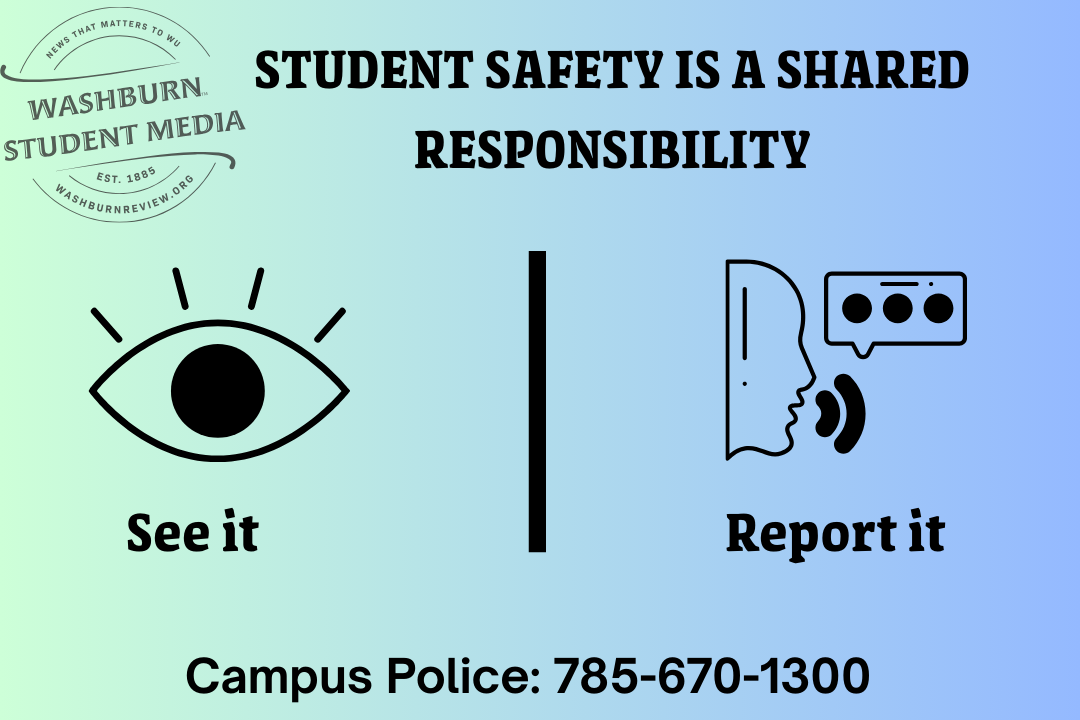
“See something, say something. Even if it looks minor, report it. That helps keep everyone safe,” Anguiano said.
Recent safety initiatives at Washburn include adding more cameras and using student building monitors. These measures, combined with strong community partnerships, help prevent crime and allow students to focus on academics and campus life. Behind the secured doors, the guest sign-in sheets, and the typical drills, there is a safety system founded on preparation, communication and trust.
Safety is everyone’s responsibility, according to Washburn University police, Residential Living employees and residence assistants. Students may help create a campus where they can live, study and feel safe by being aware of safety facts, policies and issues.
Edited by Bidhya Sapkota and Anushma Dahal