-
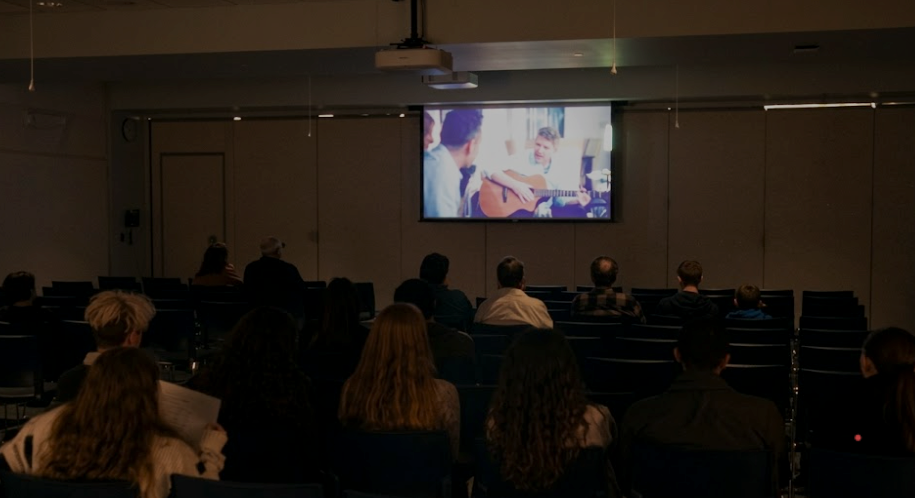
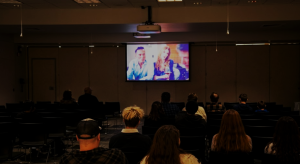
The audience at the WIFI Film Festival are viewing the morning portion of a short film at the Topeka & Shawnee County Public Library in room Marvin A. Films are screened throughout the day in different rooms in a quiet viewing setting where the public can come and go freely.
-
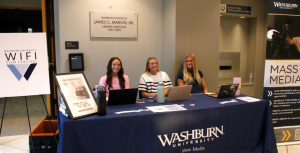
WIFI leaders and student team members; Brighton Bivens (left), Taylor Rottinghaus (middle) and Keliah Rivers (right) work the registration booth at the entrance of the festival, providing information and welcoming attendees. The team hands out programs and checks in community members as they enter.

-
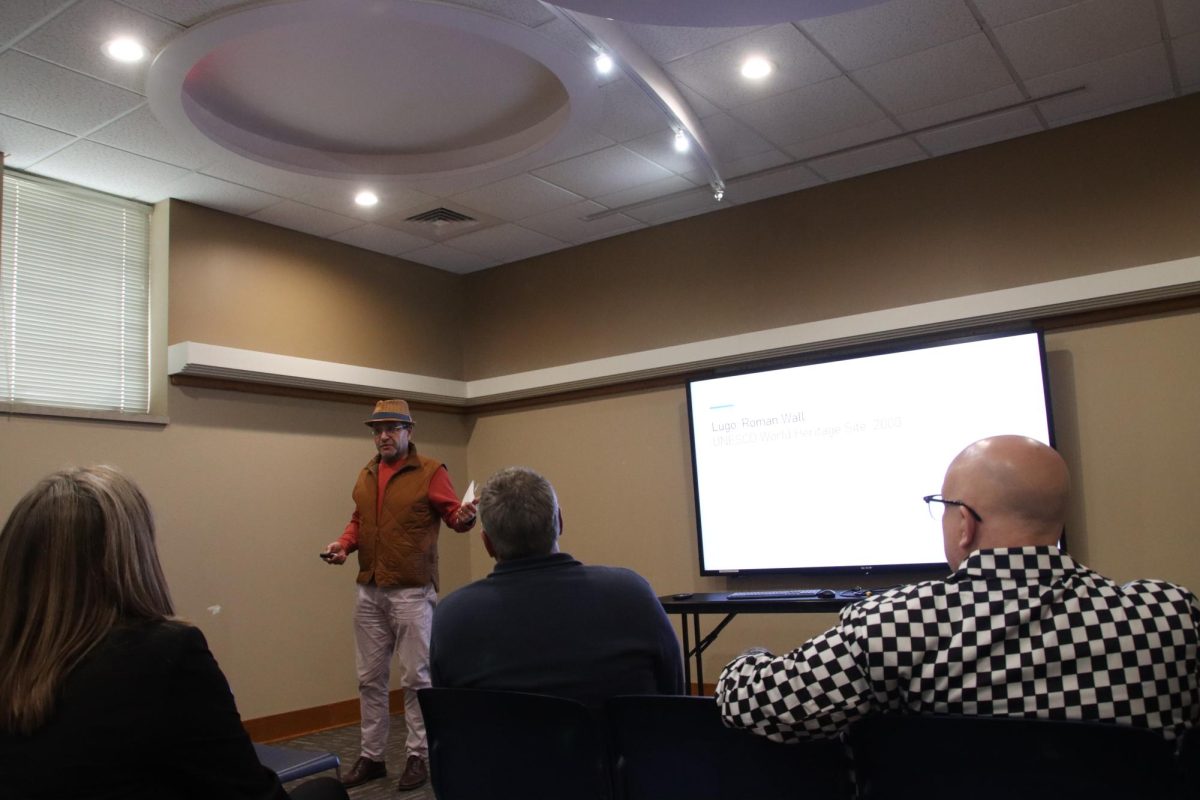
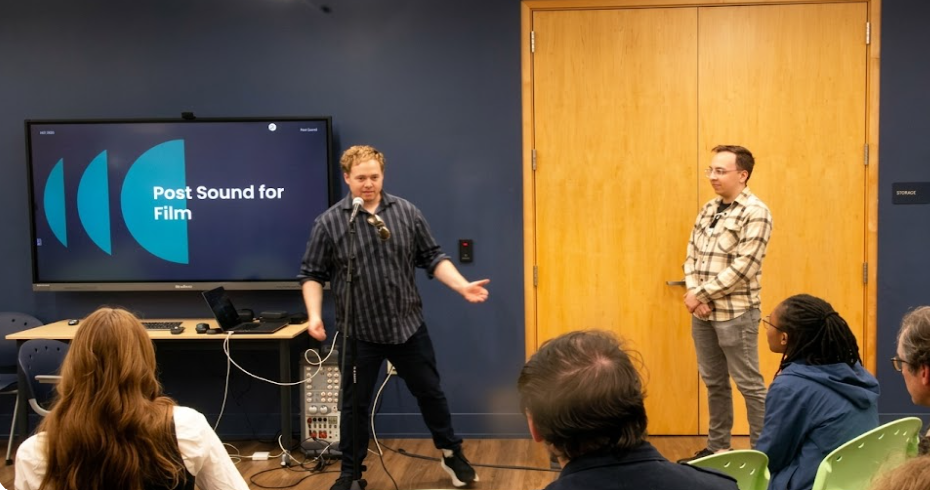
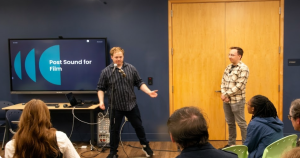
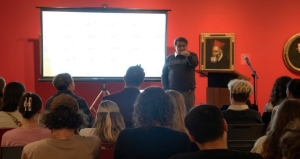
Matthew Nyquist, founding executive director, introduces Adin Replogle, filmmaker and production sound mixer for the second session of sound design. Replogle, currently earning his master of fine arts at the University of Southern California’s school of Cinematic Arts, discussed how sound functions as a storytelling tool that shapes tone and perception in film.
-
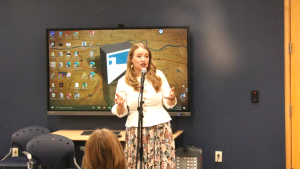
Christian Watkins, filmmaker and ordained minister, leads a production workshop at the WIFI Film Festival. Watkins is executive director of Ecumenical Campus Ministry at Kansas State University and shared her experience in filmmaking and storytelling.

-
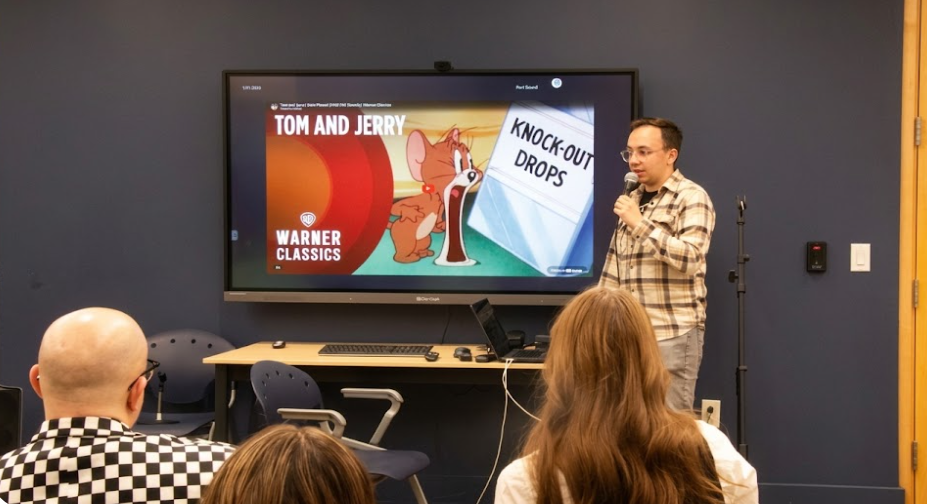
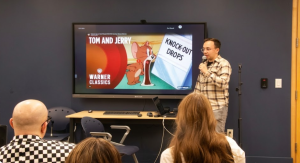
Replogle uses clips from Tom and Jerry and Captain America to show the organic sounds used vs. synthetic sounds used. He compared tools and techniques using those to illustrate differences in sound design style and layering in films.
-
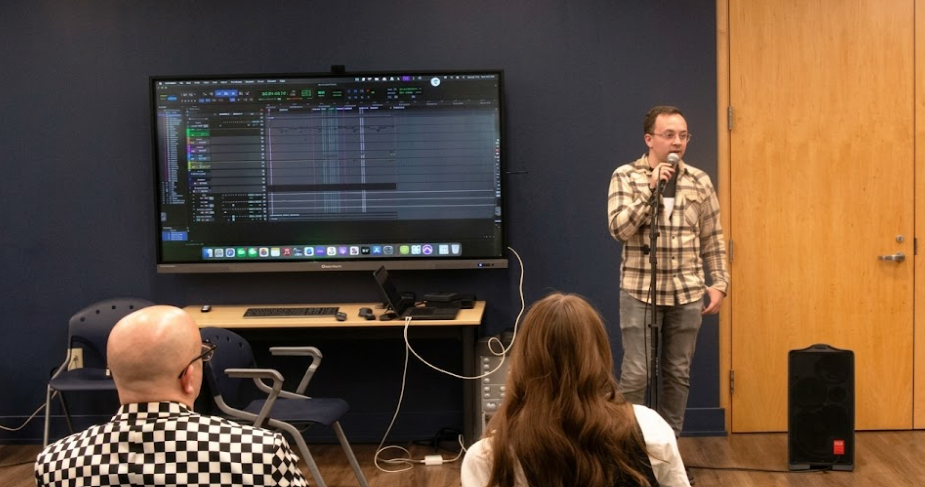
Replogle presents a demonstration using Avid Pro Tools software in his workshop. He explains the different tools and functions within the software and how to layer while analyzing waveforms.
-
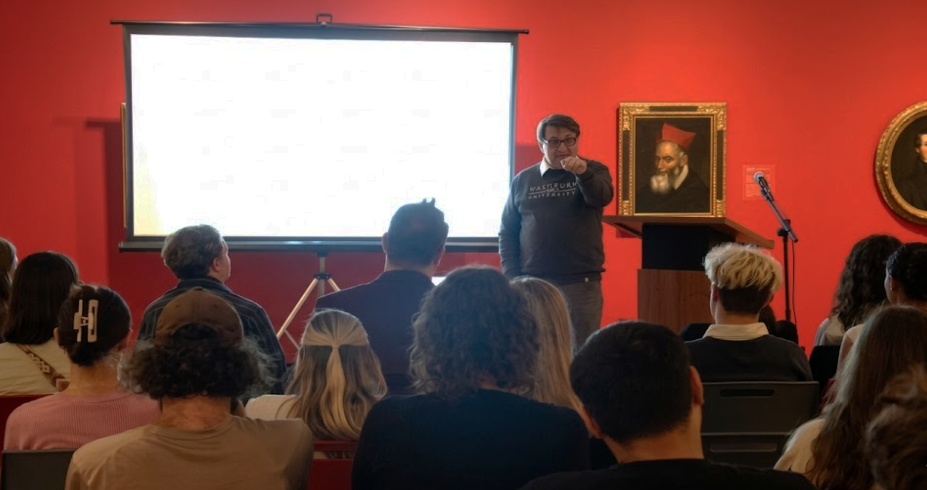
Sebastian Twardosz, founding partner of Savant Artists, leads a workshop on film development and producing. With many years in film, he advised attendees to pitch films like they are talking to a friend and trying to convince them to watch a movie.
-
WIFI Film Festival screens the romantic short film Reminisce, with a twist, produced by Leslie Morris and Ashna Sharan. A young woman married to an older husband experiences emotional turmoil when his college classmates, including his ex-girlfriend, visit during a double date.


Many ambitious filmmakers dream of breaking into the industry but often need the right opportunity to take the next step. Film festivals provide that gateway, connecting creators with professionals through networking and offering chances for distribution, media exposure and entry into award-qualifying competition.
The WIFI Film Festival, hosted by Washburn University, brought filmmakers and audiences together on April 11 from 11:00 a.m.-6:00 p.m. at the Topeka & Shawnee County Public Library to celebrate film production from the midwest. The event was held on the first floor in Marvin A-C rooms, where multiple films were screened at scheduled times throughout the day. Free workshops were also offered, providing guidance for aspiring filmmakers and producers.
Sessions covered topics such as producing, sound design and screenwriting and were led by guest film professionals.
The first workshop, held from 11:00 a.m.-12:00 p.m. It was led by Christian Watkins, executive director & ordained minister, who discussed film production. Watkins shared that she did not begin with a traditional producing background but through her studies in religion and theology, which shaped her perspective and storytelling.
Watkins outlined several ways filmmakers could succeed in producing their own films. She emphasized that investors and audiences respond to authenticity, encouraging filmmakers to find their niche, leaning into what sets them apart and visualizing their ideas.
“It should be rooted in something meaningful you care about,” Watkins said.
Watkins also addressed one of the most difficult aspects of production, which is raising money, explaining that films have a lower success rate than other industries.
“Don’t approach thinking you will get a yes,” Watkins said; emphasizing the importance of learning how to handle rejection. She further said to remain flexible with available resources by adapting instead of waiting for the perfect conditions and organizing those resources effectively.
Judea Anderson, junior film major, had her film, “The Strangler” premiere in the morning and attended the event to network with fellow producers.
“It was inspiring, because at first I thought it’d be chaotic to be a producer, making sure everything is in line. But it really just matters what energy that you bring and how much you care about the film that you’re trying to produce,” Anderson said.
The following workshop, held from 12:05-1:05 p.m. was led by Adin Replogle, filmmaker and production sound mixer, who discussed sound design. Replogle studied at the University of Southern California, where he was introduced to production sound and developed a passion for storytelling through audio. His focus is on making sound feel natural and immersive, emphasizing capturing high-quality original sound on set and avoiding overly processed audio.
In the workshop, Replogle demonstrated how different sound effects change the mood of a film. He also shared tools and techniques that he uses, including Avid Pro Tools as his primary editing software and shared a strong dislike for Automated Dialogue Replacement, noting it often loses the authenticity of original performances.
“Organizing your sound tracks makes collaboration smoother, and the people you work with will love you,” Replogle said, further mentioning having backup tracks and audio for any fixes.
The WIFI Film Festival continued to the Mulvane Art Museum from 7:00-8:30 p.m., with a session titled “Breaking Into Hollywood,” led by Sebastian Twardosz, film producer and talent manager. In contrast to his earlier workshop, which was more inspirational, this session focused on the unfiltered realities of the film industry. Despite its candid approach, the audience shared moments of laughter throughout the discussion.
When asked for advice by attendees, Twardosz said there is no secret formula for success, but gaining experience, being reliable and meeting people are key. He noted that “power is who you know,” crediting his own career success to networking.
A highly recommended path for filmmakers is to work at an agency or become an assistant to a director.
“Freelance work is harder because you would constantly search for the next job, while agency work offers more stability since you will stay until you move or retire,” Twardosz said. “Don’t lose sight of what you’re doing, be personable.”
He concluded by saying people can succeed anywhere, but Hollywood is best suited for those who are truly committed to pursuing it.
While the sessions offered highland industry insights, student organizers and attendees also shared their thoughts on the event.
“I chose to be a part of this team because it was kind of just an eye-opening experience into the film industry and I’ve never really seen that before, a new perspective,” said Taylor Rottinghaus, director of festival operations.
The festival focused on connecting students with the professional film industry.
“We have some really high-level stuff, and it just really allows students and the community to kind of intermingle with the professional world. And it’s free,” said Matthew Nyquist, founding executive director.
Nyquist added that seeing films he produced and watching the impact on audiences has been rewarding and has helped keep his passion for the work alive.
There is hope that the WIFI Film Festival will continue to be organized in future years, offering opportunities for artists to participate in a valuable experience that expands their knowledge and skills. A general rule of thumb in filmmaking is to remain authentic and passionate about the craft.
Edited by Anushma Dahal and Bidhya Sapkota