

Ice Bucket Challenge worth cold experience
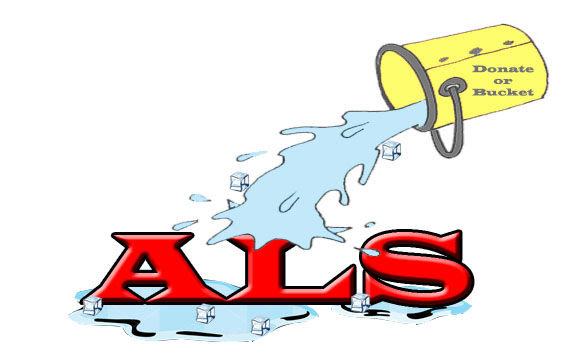
It was Aug. 20 and just as the days before that, it was dreadfully warm in Topeka, Kan. Strangely enough though, the sensation running through my shoulder and back was not one of warmth. In a matter of seconds an almost paralyzing feeling of a water and ice poured over me. Even stranger than that, I decided to record the whole ordeal.
I was challenged to do a fairly simple task by one of my best friends. The rules given to me were simple; I had 24 hours to donate $100 to the ALS Association or donate $10 and have ice-cold water dumped on me.
If I accepted the challenge then I would have to keep it going and challenge four other people through video. As it was hot that day, I chose the latter.
As I am sure that some readers already know, I am referring to the renowned Ice Bucket Challenge. Unless you’ve been living under a rock for the past few months it’s basically taken over your Facebook, Twitter and News feeds. The challenge feels as if it came out of nowhere but now it’s in front of your face whether you want to or not.
At first I was skeptical of the idea that pouring water on my head would actually benefit anyone, but because I am a good sport, it slowly grew on me.
The first positive experience that I got from seeing the challenge was that whether I wanted to or not, I was going to become more aware of what ALS even is. Fully titled as Amyotrophic Lateral Sclerosis or “Lou Gehrig’s Disease,” it is a neurodegenerative disease that affects the nerve cells in the brain and spinal cord that causes muscle spacicity that rapidly degerates, leaving the victim with difficulty swallowing, speaking and breathing, eventually leading to total paralyzation and death. There is no known cure.
Lou Gehrig is the New York Yankee baseball hall of famer who contracted the disease in the prime of his life while still playing for the Yankees.
“I’ve never actually done something. Yeah I’ve donated to organizations but I wanted to go and do this,” said Colby Taylor, senior communications major at Washburn.
From there I realized that those who participate in the challenge were also expected to donate to a charitable cause as well. This is where my second point of skepticism came in. I assumed that people would only dump water on their heads and then call it a day while patting themselves on the back. Checking through the official numbers, the contrary is actually true.
Since the sudden growth of the challenge, the ALS Association has attributed it to the reason for it’s larger than normal donations coming lately.
Their press release stated that from July 29 to Aug. 25, the association has received over $79.7 million in donations compared to only $2.5 million last year during the same period. What’s even better is that people have used this opportunity to donate to other causes closer to their hearts as well.
“It’s very active and it’s always on my news feed. It’s about calling people out individually,” said Taylor.
There is still criticism about the challenge. Some say it supports selfishly doing something online so friends can look at it and see what a great person you are. My response to that is that I don’t care. It may not be the most altruistic moment of mankind but the donations are still going to good causes.
To the readers of this article; You have 24 hours.
Your donation will support the student journalists of Washburn University. Your contribution will allow us to purchase equipment and cover our annual website hosting costs.



Steven Westermann • Jul 11, 2025 at 3:55 pm
I was diagnosed with bulbar ALS in May 2024. I live in Texas, and I’m 68 years old. I take Nudexta medication to help with the emotional outbursts of laughing and crying. The weakness, slurred speech, and muscle loss progressed quickly. Mobility has been an issue since Dec 26, when I fell and broke my hip, and although I made small strides at first, I felt like my life had been placed on a countdown, as there was no known cure other than the prescription of riluzole medications, vitamins, and therapies. As the disease progressed, my symptoms worsened. With my neurologist’s guidance we decided to try other approaches and started the ALS/MND treatment, and it changed everything. Within 5 months, I noticed more strength in my limbs, clearer speech, and I have stopped using feeding tubes. I’m starting to learn how to walk again & I now sleep better. This ALS/MND treatment program gave me back control and hope. we got the treatment from uine healthcentre. ne t This is a game changer for people with ALS.