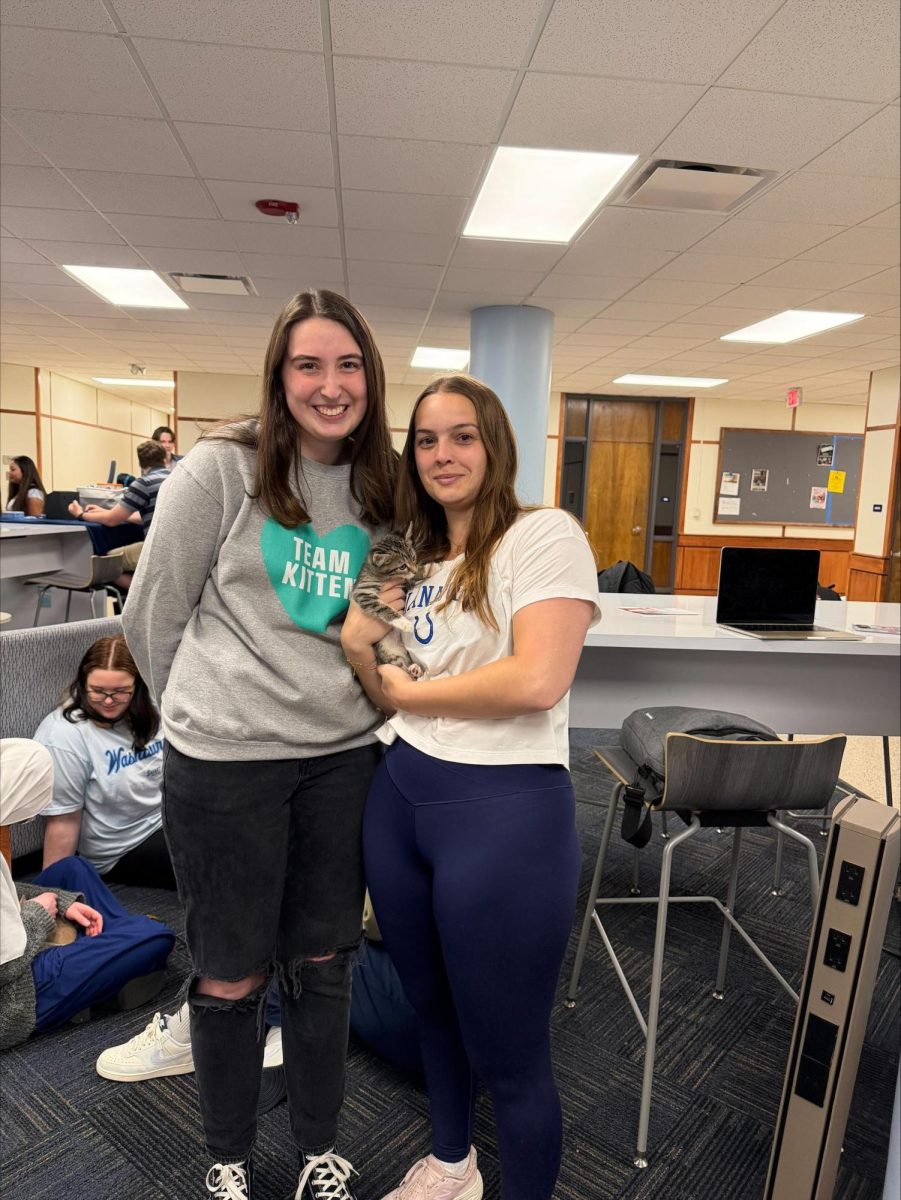
On April 9, students gathered in Plass 119 for a Derechos y Lotería workshop hosted by Aleshire Centre for Leadership and Community Engagement and Hispanic American Leadership Organization for an educational game night. The organizers of the event shared insights on basic rights with a focus on interactions with Immigration and Customs Enforcement, alongside with a fun and interactive game of loteria often described as the Mexican version of Bingo.
The workshop included key points on what an individual can do when they encounter ICE. Participants learned about their rights to remain silent, their right to speak with an attorney and what to do if officers come to their home or stop them in public space.The workshop also explained how bystanders can safely and effectively respond when they witness an immigration-related encounter.
Isavel Nuno-Maciel, junior legal studies major and one of the organizers of the event representing Aleshire centre, outlined that recent Kansas legislation, such as Senate Bill 254, would require proof of lawful presence to receive certain public benefits and mandate immigration status checks for some criminal defendants. She said that understanding these changes is especially important for undocumented immigrants and permanent residents, who can face heightened risks if they are arrested or come in contact with law enforcement.
“I wanted to make sure that everyone knew what to do during an ICE encounter and how bystanders can also react to those encounters,” Nuno-Maciel said.
Paloma Martinez, junior anthropology major and president of Hispanic American Leadership organization, one of the two organizers for the event, said organizing these kinds of events is important so that people know what rights they have and she just wanted to spread awareness.
Martinez said her own identity and relative privilege motivated her to organize the event.
“As I am privileged, I am mixed, so when I was wise, I never had to worry about this. But not everybody has the same privilege,” Martinez said. “Yes, I’m so Brown, but I can just recognize that I am a U.S. citizen, the privilege of hosting these events, going to protest and I don’t have to worry about the fear of deportation. It’s my job as someone who has the power to host these events and show [them], hey, if we all stand together, we can make a change.”
Alongside the informational portion, the participants played loteria for small giveaways and enjoyed a potluck-style shared meal. For some students, the chance to learn about rights and engage with Latino culture made the event especially meaningful.
“I had a lot of fun tonight, especially being a Spanish major, … getting to practice my Spanish is so fun and learning about the different cultural differences,” said Caroline Chiddix, junior elementary education and Spanish major.
Chiddix said she appreciated learning new vocabulary through the loteria game. She said the portion of the evening focused on rights and immigration enforcement stood out just as much as the cultural activities.
“It’s a very heavy topic, especially being in education; it’s just something I think about a lot with my kiddos,” Chiddix said. “It was really good to learn about what is real and what is not real, because it’s really hard to find good information about that. They had really good information tonight.”
Jaxon Blubaugh, sophomore history education major, said that the event balanced culture and information about rights.
“It was great. I got to learn a lot about Mexican culture with the games, and some of the food was more traditional Mexican food,” Blubaugh said. “But also it’s very important that everybody stays educated and knows their rights at all times.”
The event was an insightful opportunity for the participants to enjoy the Hispanic culture through games and food while also learning about their rights. The organizers said they hope Derechos y Lotería will serve as a starting point for more conversations about immigration, safety and community support on campus. By pairing legal information with a culturally familiar game and a shared meal, they aimed to create a space where students could build connections and leave feeling more informed about their rights.