Washburn University’s annual Russell Jacobs Lecture, “Ethics and Politics: A Divorce to Regret,” brought wonder, fascination and a sense of connection for all curious minds interested in philosophy and human behavior.
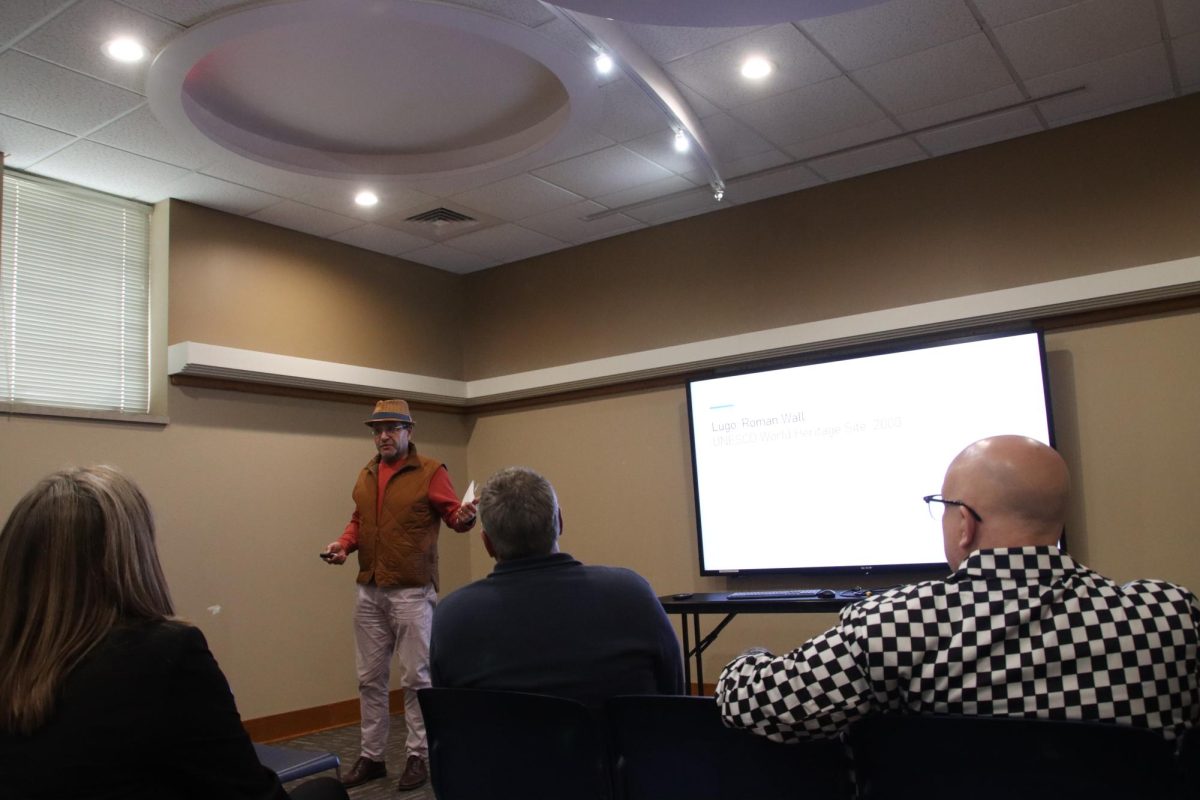
The event, held Tuesday, Oct. 28, from 7-8:30 p.m., featured Philip Kitcher, philosopher from Columbia University. Kitcher discussed how the modern political focus on economics efficiency has replaced what was once an ethical foundation for decision-making. He argued that ethical life should guide human action much like moral code once did, stressing that ethics must come before economics.
Kitcher also offered a thoughtful message to the next generation of thinkers: “try to build connections between individual thinkers by offering the world a picture of how things fit together.” His advice encouraged collaboration among people with different ideas and the creation of broader, integrated understandings of complex issues.
Audience members shared their thoughts on the lecture’s impact.
“The lecture seemed to offer a solution to a significant problem,” said Rich Crank, a philosopher.
Jackie Patterson, Washburn alumni, emphasized how the discussion connected academic ideas to real-world challenges.
“I was already on campus, so it was convenient to go,” Patterson said. “It really tied in with what we’ve been learning about ethics—helping, making connections and understanding community involvement.”
The evening also highlighted Kitcher’s newly published book, “The Rich and the Poor,” which expands his call for society to embrace moral inquiry and return to a richer ethical life, one that helps guide wiser and more responsible decisions.
The event wrapped up with Kitcher reminding the audience to always think ethically and let moral reflection guide their choices. Guests were invited to browse and purchase some of his books for a deeper look into his ideas.The evening ended on a friendly note with everyone gathering for refreshments and conversion, continuing the discussions sparked by the lecture.
Edited by Anushma Dahal and Arohi Rai