

“The Exorcist” is a cinematic masterpiece that will make your head spin long after viewing
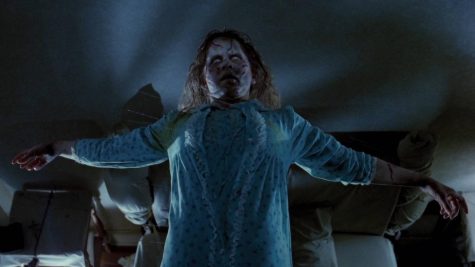
“The Exorcist,” a 1973 horror movie directed by William Friedkin, is still extremely disturbing in nature and undeniably shocking in appearance. Although there are several separate stories pulsing through the script, they all collide with preteen Regan (Linda Blair), the daughter of actress Chris MacNeil (Ellen Burstyn). Regan suddenly begins to act uncontrollably, swearing and exhibiting unusual strength, much to the confusion of the top psychiatrists in the Washington, D.C. area.
When no specific affliction can be pinpointed, the archaic religious practices of exorcist Father Merrin (Max von Sydow) are called upon for help, along with the aid of Father Karras (Jason Miller), whose own faith steadily wanes after the death of his mother. Vividly grotesque and strikingly creepy, especially with several added scenes for subsequent theatrical rereleases (including the notorious inverted descent down a staircase, known as the spider-walk), this expertly-helmed film relies on unbearable suspense and chilling visuals to captivate its audience – resulting in a momentous ten Academy Award nominations, including Best Picture and the distinction of second-highest grossing film of 1973.
While there are dismaying non-supernatural moments here, such as a particularly unpleasant medical examination when Regan undergoes physical testing for her condition and the suspicious death of Chris’ boss Burke Dennings (Jack MacGowran), the film mostly relies on mental and emotional terrors, abnormal behaviors, and psychosomatic happenings – all involving an innocent child. This motif has peppered a large percentage of subsequent shockers, evidenced by the substantial influence “The Exorcist” had (and still has) on the genre. That core concept remains routinely sinister, though it has been regularly overused and dulled down by poor dialogue, bad acting, and underdeveloped character backgrounds in lesser films.
“The Exorcist” dares to show an imagery-heavy horror film with proper character development and a detailed storyline. The various beliefs in the film are individually examined, taking care not to approach the notion of expelling malevolent spirits as a contrived, commonplace concept – most obvious when Chris confronts Karras on how to acquire an exorcism, prompting an utterly perplexed response. Even to a man of faith, such a rite is an unprecedented, last resort solution. It is this skepticism and concern that infuses a sensational degree of realism to a subject some viewers might immediately interpret as ludicrously fictional.
By the end, a truly epic feel surrounds this battle between Good and Evil, which can be principally attributed to the scholarly approach to the subject matter and technically proficient design and execution. This has also led to “The Exorcist” having aged incredibly well, despite the significant advances in technology and computer graphics. The makeup is still top-notch and spectacularly chilling (for both Sydow and Blair), paired perfectly with puppetry and repulsive props for several of the most alarming cinematic shots, including a spinning head, levitation, and projectile vomiting. Those unforgettable sequences helped define the most popular beliefs about exorcisms in film, while smartly employed ominous lighting, evocative cinematography, and an arrangement of modern classical compositions for the soundtrack further establishes the electrifying tone of dread.
I have always been fond of horror stories and movies, and this one took me for a ride and spewed me out the other end, shaken up. The movie sparked an onslaught of evil-rooted films that based their influence upon the devil, but perhaps none have quite yet lived up to the legacy of their original predecessor.
Edited by Justin Shepard
Your donation will support the student journalists of Washburn University. Your contribution will allow us to purchase equipment and cover our annual website hosting costs.







Philosopher Muse • Sep 2, 2025 at 6:10 am
Awesome review, Rakesh! You nailed exactly why The Exorcist still stands out as a classic in horror. I really liked how you focused not just on the scary visuals, but also on the deeper emotional stuff—especially Father Karras’ crisis of faith. That’s what really separates it from so many other horror films that only go for surface-level scares.
Totally agree with you about its impact on the genre too. Even now, tons of horror movies try to borrow from it, but few manage to capture that same mix of realism, atmosphere, and memorable performances. It’s wild how a film from the early ’70s still holds up so well, especially with the makeup and sound design—it still creeps me out in the best way. Your piece actually made me want to rewatch it and appreciate how ahead of its time it really was. Great job!
Also, I was wondering if you’ll be covering Mike Flanagan’s upcoming take on The Exorcist? Supposedly it’s going to be a complete reimagining, not tied to the recent sequels. It was supposed to come out in March 2026, but it sounds like it’s been delayed since production hasn’t started yet—he’s still wrapping up his Carrie series. Given his work on The Haunting of Hill House and Doctor Sleep, I’m really curious to see how his style translates to such a legendary story. Could be something really special.